

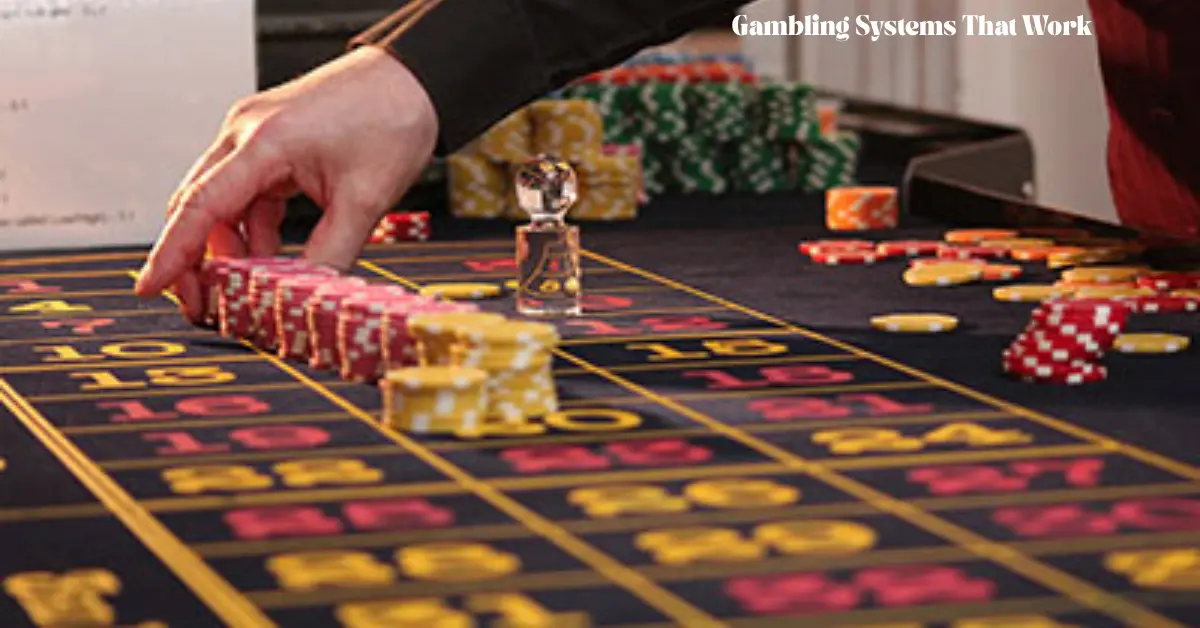
If you’ve ever searched for ways to beat the casino, you’ve probably come across the phrase “gambling systems that work.” It’s a powerful idea — a strategy that helps you win consistently, reduce losses, and maybe even walk away with steady profits.
But here’s the honest question: Do gambling systems really work?
The short answer? Some systems can improve discipline and bankroll management — but no system can eliminate the house edge entirely.
In this article, we’ll explore what gambling systems are, which ones are most popular, how they actually work, and whether they can truly give you an advantage. We’ll also discuss smart gambling habits so you can play responsibly and enjoy the experience without unnecessary risk.
What Are Gambling Systems?
A gambling system is a structured strategy designed to manage bets in a way that aims to:
- Reduce losses
- Maximize short-term wins
- Control bankroll
- Create discipline
- Increase excitement
Most gambling systems are based on mathematical patterns, bet progression strategies, or probability theories.
It’s important to understand one thing early on:
A gambling system does not change the odds of the game. The house edge remains the same.
What these systems can do is help manage your money and emotions.
The Truth About “Gambling Systems That Work”
When people say a gambling system “works,” they usually mean one of three things:
- It helps them avoid losing everything quickly
- It allows them to win in short sessions
- It gives them structure and control
However, no system guarantees long-term profit in games with a built-in house edge like roulette, blackjack, baccarat, or slot machines.
Now let’s explore some of the most well-known gambling systems and how they work.
1. The Martingale System
The Martingale system is one of the most famous gambling systems that work — at least in theory.
How It Works:
- You double your bet after every loss.
- When you win, you return to your original bet.
Example:
- Bet $10 → Lose
- Bet $20 → Lose
- Bet $40 → Lose
- Bet $80 → Win
That $80 win covers previous losses and gives you a $10 profit.
Why People Like It:
- Simple to understand
- Appears mathematically logical
- Designed to recover losses quickly
The Problem:
- Requires a large bankroll
- Table limits can stop progression
- Long losing streaks can wipe you out
Martingale can work short term — but one bad streak can be devastating.
2. The Fibonacci System
The Fibonacci system is a softer version of Martingale.
How It Works:
It follows the Fibonacci sequence:
1, 1, 2, 3, 5, 8, 13, 21…
You move one step forward in the sequence after a loss and two steps backward after a win.
Why It’s Popular:
- Slower progression than Martingale
- Less aggressive
- Feels safer
Reality Check:
While it reduces risk compared to Martingale, it still cannot overcome the house edge.
It may help stretch your bankroll longer, but it’s not a guaranteed winning system.
3. The D’Alembert System
This is considered one of the more conservative gambling systems that work for risk control.
How It Works:
- Increase your bet by one unit after a loss
- Decrease your bet by one unit after a win
Example:
- Bet $10 → Lose → Bet $20
- Lose → Bet $30
- Win → Bet $20
Why It Feels Safer:
- Slower increase in bets
- Lower risk of massive losses
- Easier to manage emotionally
This system focuses more on balance rather than chasing losses aggressively.
4. The Paroli System (Reverse Martingale)
Unlike Martingale, the Paroli system increases bets after wins.
How It Works:
- Double your bet after each win
- Stop after 2–3 consecutive wins
- Return to original bet after a loss
Why Players Like It:
- Protects you during losing streaks
- Maximizes winning streaks
- Less risky than Martingale
This strategy can work well in short bursts but depends heavily on hitting winning streaks.
5. Flat Betting Strategy
Surprisingly, one of the most reliable gambling systems that work is the simplest: flat betting.
How It Works:
- Bet the same amount every time
No progression. No doubling. No chasing losses.
Why It Works:
- Protects your bankroll
- Prevents emotional betting
- Reduces stress
Professional gamblers often prefer flat betting because it focuses on long-term sustainability instead of quick recovery.
6. The 1-3-2-6 System
This system is popular in blackjack and roulette.
How It Works:
You bet in a specific sequence after wins:
1 unit → 3 units → 2 units → 6 units
If you lose at any step, you restart.
Advantage:
- Structured profit-taking
- Limits risk exposure
- Works well during short winning streaks
Like all systems, it doesn’t change the odds — but it helps manage gains smartly.
Do Gambling Systems Actually Beat the Casino?
Here’s the honest answer:
No betting system can mathematically eliminate the house edge in the long run.
Casinos design games with built-in profit margins. Over time, the house always has the advantage.
However, gambling systems that work can:
- Improve discipline
- Control emotions
- Extend playtime
- Reduce reckless losses
- Create short-term winning opportunities
They work for money management — not for guaranteed profit.
Where Gambling Systems Work Best
Some games are better suited for betting systems than others.
Best Games for Systems:
- Roulette (even-money bets)
- Blackjack (with strategy)
- Baccarat (banker/player bets)
Worst Games for Systems:
- Slot machines
- Keno
- Lottery
Games with predictable odds and structured betting options allow systems to function more effectively.
The Psychological Benefit of Gambling Systems
One overlooked advantage of gambling systems is emotional control.
When players don’t have a strategy, they often:
- Chase losses
- Increase bets randomly
- Gamble out of frustration
A system gives structure. And structure reduces panic.
Even if the math doesn’t guarantee profit, discipline itself is powerful.
Bankroll Management: The Real Secret
If there’s one concept more important than gambling systems that work, it’s bankroll management.
Here are smart bankroll tips:
1. Set a Loss Limit
Decide beforehand how much you’re willing to lose.
2. Set a Win Goal
Many players forget this. If you double your money, consider stopping.
3. Divide Your Bankroll
Split your gambling money into sessions.
4. Never Chase Losses
This is where most damage happens.
The best gambling system is useless without bankroll discipline.
Are There Any “Guaranteed” Gambling Systems?
If someone promises:
- 100% win rate
- Secret casino exploit
- Risk-free profit
Be careful.
Casinos operate legally because their games are statistically profitable.
There is no magic formula.
The only exception is when players gain skill-based advantage — like professional blackjack players using card counting — but even that requires extreme discipline and is often restricted by casinos.
Online Gambling and Systems
Online casinos make it easier to apply systems because:
- No physical pressure
- Fast gameplay
- Automated bet adjustments
However, faster gameplay also means faster losses.
Be cautious with online environments. The speed can amplify mistakes.
The Biggest Mistake Players Make
The biggest mistake isn’t using a system.
It’s believing the system removes risk.
Every gambling system that works still carries:
- Financial risk
- Variance
- Emotional pressure
The key is realistic expectations.
A Smarter Way to Think About Gambling Systems
Instead of asking:
“Which gambling system guarantees profit?”
Ask:
“Which system helps me control my money and emotions?”
That shift in mindset changes everything.
Responsible Gambling Matters
While gambling can be entertaining, it should never be treated as a reliable income source.
If gambling stops being fun and starts causing:
- Stress
- Debt
- Emotional harm
It’s time to step back.
A true winning strategy includes knowing when not to play.
Final Thoughts: Do Gambling Systems That Work Really Exist?
Yes — but not in the way most people expect.
Gambling systems that work:
Help manage bankroll
Improve discipline
Structure betting decisions
Reduce emotional gambling
But they do not:
Eliminate house edge
Guarantee profit
Prevent losing streaks
The smartest approach combines:
- A simple betting system
- Strong bankroll management
- Emotional discipline
- Realistic expectations
If you treat gambling as entertainment — not investment — and use systems wisely, you can extend playtime and reduce damage.
